
Children’s Right to Read -A Statement from Publishers Without Borders (PWB)
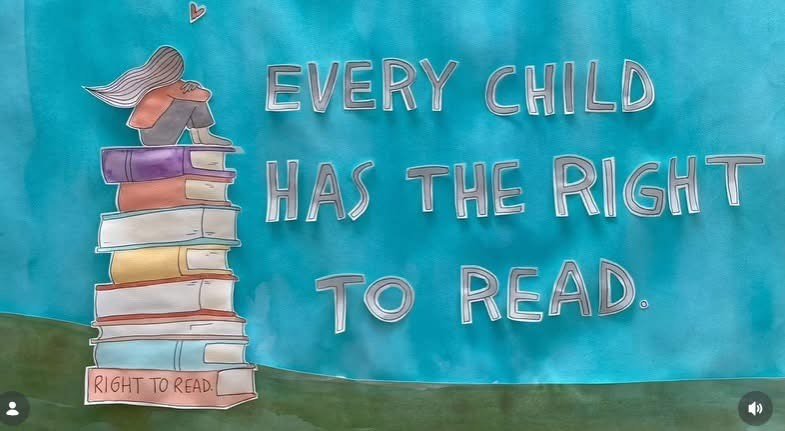
(Image via @rightsofeverychild )
The Jamaica Book Festival Director, Latoya West-Blackwood has been a member of Publishers Without Borders since its founding in 2020. The festival fully endorses the following statement from PWB and stands in solidarity with members across the world operating in zones of conflict and facing challenges to Freedom of Expression and the Right to Read.
Publishers Without Borders (PWB) is an international forum that brings publishers together as a means of staying strong through adversity. It was born in 2020, during the COVID‑19 pandemic, as a response to the isolation many publishers were experiencing worldwide. Its purpose was simple and urgent: to ensure that publishers would not feel alone, even in times when borders were closed and certainty was in short supply.
Today, PWB continues to serve as a meeting point for publishers everywhere—a space for dialogue, solidarity, and mutual support—especially when books, culture, and freedom are under pressure.
PWB exists first and foremost to facilitate networking. It also supports institutions such as PEN, UNESCO, IBBY, IFLA, the IPA and all those who defend the Freedom to Write, the Freedom to Publish, and the Freedom to Read. PWB firmly opposes any situation—political, social, cultural, or otherwise—that undermines these three fundamental freedoms.
PWB is also unequivocally against all wars. Armed conflict, regardless of where it occurs, always places books, publishers, authors, booksellers, libraries, and readers at risk. War destroys more than buildings and infrastructure; it disrupts the cultural, intellectual, and emotional ecosystems that allow societies—and especially children—to grow.
Recent events in different parts of the world have once again highlighted how vulnerable books and reading environments are during periods of instability or conflict. When access to books is interrupted, restricted, or destroyed, the cultural and emotional fabric of communities begins to unravel. This impact is felt most deeply by children.
Access to reading does not exist in abstraction. It depends on publishers, but also on bookstores, librairies, schools, and public book spaces—places where books are discovered, shared, and experienced. These spaces are often among the first to close, be damaged, or become inaccessible in times of crisis, depriving children not only of books, but of safe and meaningful places to read and gather.
PWB does not speak on behalf of any single country, culture, or publishing ecosystem. Our concern is global and inclusive. Children everywhere share the same right to read, to imagine, to learn, and to grow without fear of judgment, punishment, or repression. Access to books should never depend on geography, language, belief, or circumstance.
Books and book spaces must remain places of openness, curiosity, and safety. No child should be denied access to reading— or made to feel vulnerable for exploring ideas, stories, or knowledge. Reading is not a conditional privilege; it is essential to human growth and understanding, and a core part of learning and imagination.
PWB stands with all those who believe that publishing, books, reading, and the places that sustain them are essential to human dignity, cultural continuity, and individual freedom. These rights deserve recognition and protection comparable to the most widely acknowledged humanitarian principles. Just as the Red Cross and Red Crescent symbolize the right to health and physical well‑being, access to books and the freedom to read should be recognized as equally vital to intellectual, emotional, and cultural well‑being.
Publishing, bookselling, and reading are not neutral activities. They are foundational to critical thinking, dialogue, empathy, and social resilience. When books are threatened, silenced, or removed from public life—whether through violence, censorship, or fear—societies lose more than paper and ink. They lose voices, memory, understanding, and futures.
For these reasons, PWB calls on the international publishing community, booksellers, librarians, educators, cultural organizations, and institutions committed to human rights to reaffirm their shared responsibility to protect:
Freedom to Write — allowing authors to express ideas without fear;
Freedom to Publish — enabling publishers to bring diverse voices to readers;
Freedom to Read — ensuring that readers, especially children, can access books and book spaces without restriction, intimidation, or consequence.
Protecting books means protecting people.
Protecting bookstores, libraries, and reading spaces means protecting the places where ideas are formed and shared.
Protecting the right to read means protecting the world children are allowed to imagine—and build.
Reading Knows No Borders. Children Know No Borders.